What Is Facelift Recovery Really Like?
Most facelift patients recover faster and more comfortably than they expect. Bruising and swelling are typically minimal when tissue is handled carefully during surgery, and most patients are presentable within two weeks, with final results settling in by eight to twelve weeks. Recovery depends far more on surgical technique and pre-operative preparation than on willpower or luck. How a patient heals varies based on skin quality, age, and overall health, but the biggest single factor is how gently the deeper facial tissue is handled during the procedure itself.
The scope of the procedure also affects recovery. A more limited procedure like the California Deep Plane Mini Lift generally involves a shorter, easier recovery than a full Enhanced Deep Plane FaceliftEnhanced Deep Plane Facelift, simply because less tissue is being addressed. Patients considering either option should factor recovery time into that decision alongside the results each is designed to achieve.
How Painful Is a Facelift?
Most patients find a facelift far less painful than expected. Discomfort is typically mild and concentrated around the ear rather than across the whole face, since the ear and surrounding skin carry a dense network of sensory nerves affected during the procedure. Most patients need little more than over-the-counter pain medication afterward, and any tightness or discomfort typically eases within the first few days.
Dr. Anton“There is some discomfort around the ear, which we minimize with two anesthetics during surgery. One lasts about eight hours, called Marcaine, and another one called Exparel that lasts about three days.”
Will I Bruise After a Facelift?
Bruising is one of the most common fears patients have going into surgery, and one of the most common surprises afterward. How much bruising occurs comes down almost entirely to how gently tissue is handled during the procedure, rather than to age or skin type. Careful cautery technique and precise dissection keep blood contained within the vessels rather than allowing it to pool in surrounding tissue, which is what actually causes visible bruising and prolonged swelling.
Dr. Anton“ We want to keep the red blood cells in the vessels, not in the tissues. When red blood cells get into the tissues, that’s more bruising, that’s more pain, and the body has to take away those red blood cells, which means more inflammation and more scarring.”
One patient, one week removed from a lower facelift, upper and lower blepharoplasty, neck liposuction, and fat transfer, described exactly how different her actual experience was from what she expected.
Patient, one week post-op“ How easy it was that I didn’t bruise like I thought I was going to. I thought I was going to have big black and blue eyes. I thought my cheeks and my neck were gonna swell really bad and be really black and blue, and it just didn’t happen.”
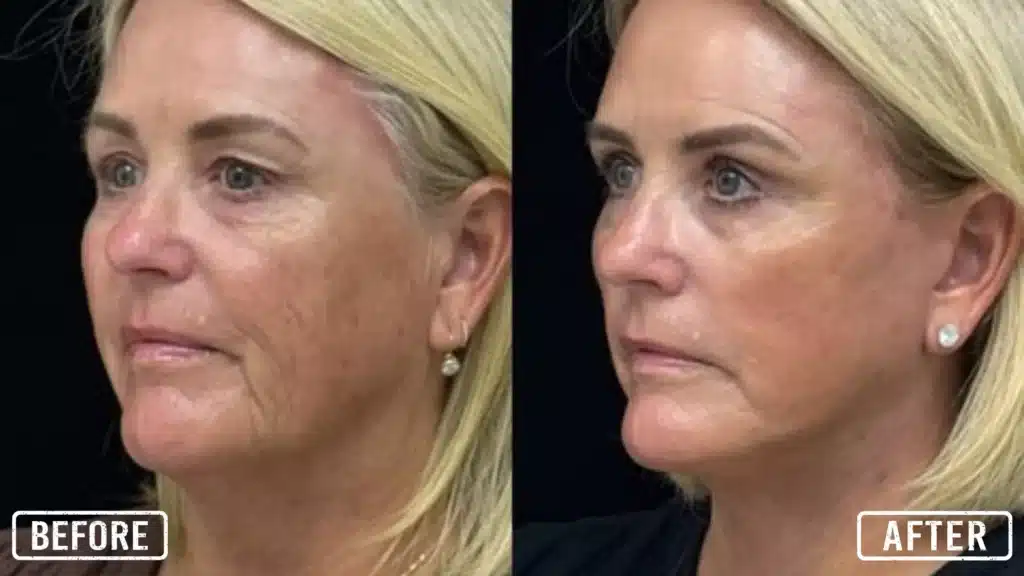
When bruising does occur, it typically follows a predictable pattern, appearing darker in the first few days, then shifting to yellow-green tones as the body reabsorbs it, before fading entirely, usually within two to three weeks.
What Should I Do Before and After Surgery to Support a Smooth Recovery?
Recovery depends heavily on the individual, genetics, skin quality, and overall health all play a role in how quickly someone heals. But a lot is within a patient’s control, and preparation starts well before the day of surgery.
A few of the most useful things patients can do to prepare:
- Eat a nutrient-dense, anti-inflammatory diet in the weeks leading up to surgery, since reducing baseline inflammation gives the body a head start on healing
- Limit or eliminate alcohol for at least a few weeks before and after surgery, since alcohol can interfere with clotting and prolong swelling
- Avoid blood thinners like aspirin and NSAIDs for about a month beforehand, using Tylenol only for aches, pains, or headaches during that window
- Stay well hydrated and get adequate sleep in the weeks before surgery
- Arrange a caregiver for the first night and the days immediately following surgery, since patients aren’t able to drive or fully care for themselves right away
That same caution carries into the weeks after surgery as well, since healing tissue needs time to stabilize before it can safely handle normal activity again.
Dr. Anton“For two and a half weeks after surgery, patients need to stay very calm, nothing to raise blood pressure, no straining, no heavy lifting, no alcohol. The micro-clots from surgery need that time to become firm.”
When Can I Return to Work After a Facelift?
Most patients return to work and their normal social schedule within two weeks. Sutures are typically removed within the first week, and by week two any remaining bruising or swelling is minimal enough that cover-up or foundation makeup is permitted. A compression garment is usually worn for about the first week to support healing tissue and reduce swelling. Activity restrictions on anything that raises heart rate or blood pressure, exercise, bending, lifting, straining, alcohol, generally stay in place for the first two weeks and ease around four to six weeks once cleared. Driving is usually possible once pain medication is no longer needed and neck mobility feels comfortable.
Patients with physically demanding jobs, or roles that involve significant public-facing interaction, may want to plan a slightly longer window before returning, since everyone’s comfort with visible healing signs, even minor ones, is different. Sun exposure should also be limited during the first several weeks, since healing incisions and skin are more sensitive to UV exposure than usual.
When Will I See My Final Results?
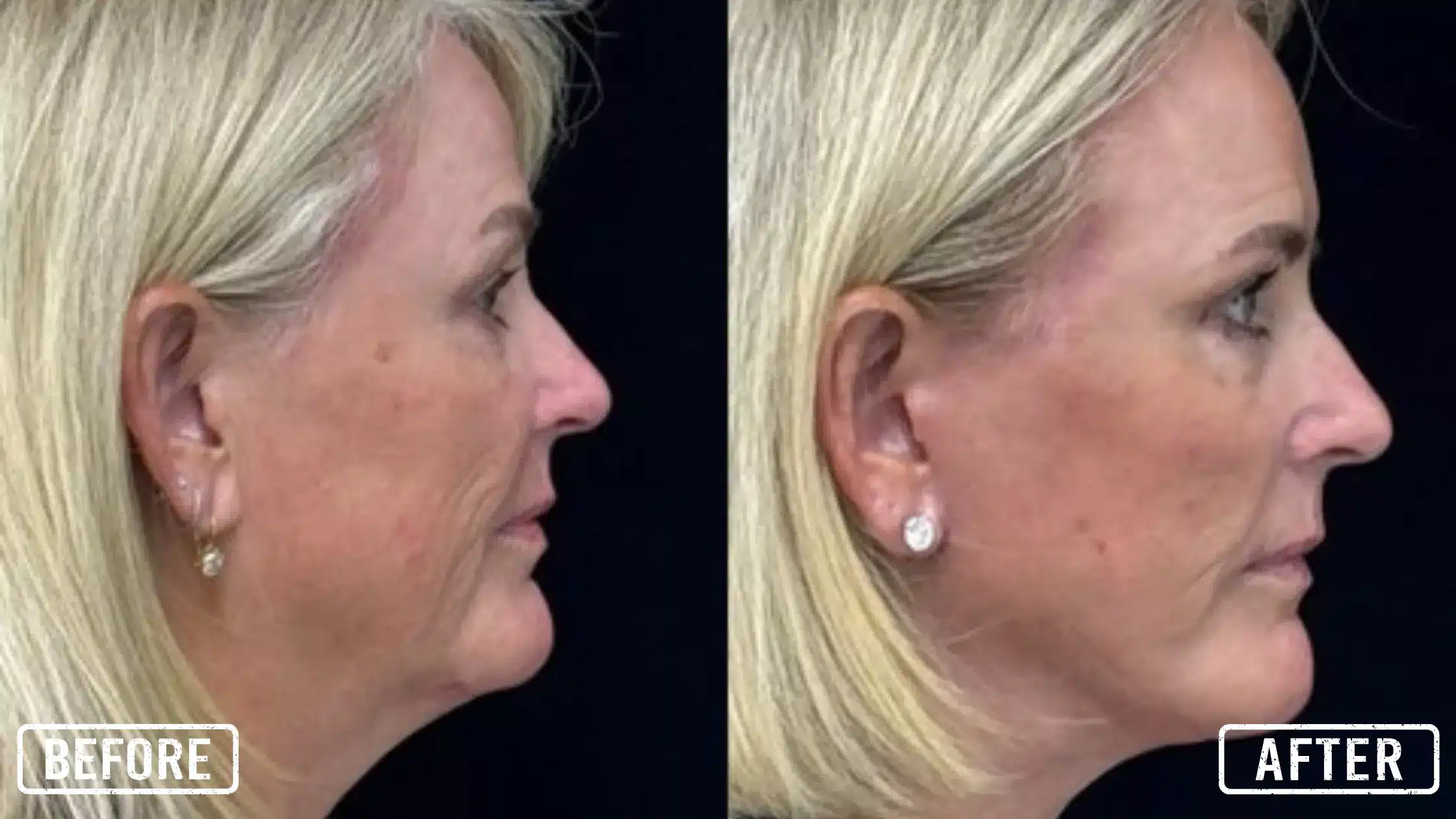
Final, natural results are typically visible at eight to twelve weeks, once all swelling has fully settled and the deeper tissue has had time to heal into its new position. Scars along the hairline and around the ears continue to fade over this same window, eventually becoming very difficult to notice. Recovery itself is usually far less eventful than patients expect going in.
For one patient, the change wasn’t just visible, it changed how she felt day to day.
Patient “How more contoured my cheeks are, more open my eyes are. I just feel like I look younger.”
How Long Does Full Recovery Take?
Some residual, minimal swelling can persist for up to six months as the healing process fully completes, though by this point it’s typically unnoticeable to anyone but the patient herself. Full recovery is gradual, but the most noticeable changes happen in the first two to three months. After that, ongoing treatments like Microneedling and IPL are often recommended, not to aid the surgical recovery itself, but to stimulate collagen and elastin production in the skin, helping the results of the facelift look fresh and extending how long they last. Every patient heals on their own timeline, but the pattern above holds true for the great majority of facelift patients.
Frequently Asked Questions About Facelift Recovery
What Is Facelift Recovery Really Like?
Most facelift patients recover faster and more comfortably than expected, with bruising and swelling typically minimal when tissue is handled carefully during surgery. Most patients are presentable within two weeks, with final results settling in by eight to twelve weeks.
How Painful Is a Facelift?
Discomfort after a facelift is typically mild and concentrated around the ear, managed with two targeted anesthetics during surgery. Most patients need little more than over-the-counter pain medication afterward.
Will I Bruise After a Facelift?
Bruising depends primarily on how gently tissue is handled during surgery rather than on age or skin type. Careful technique keeps blood contained within vessels rather than pooling in tissue, which is what causes visible bruising and prolonged swelling.
What Should I Do Before and After Surgery to Support a Smooth Recovery?
Recovery depends heavily on the individual, but eating an anti-inflammatory diet, limiting alcohol, and avoiding blood thinners like aspirin for about a month before surgery all help prepare the body to heal well. Afterward, avoiding anything that raises blood pressure, straining, heavy lifting, alcohol, for about two and a half weeks allows the surgical micro-clots to stabilize.
When Can I Return to Work After a Facelift?
Most patients return to work and their normal schedule within two weeks. Sutures are removed within the first week, and bruising or swelling is minimal enough by week two for makeup to conceal.
When Will I See My Final Results?
Final, natural results are typically visible at eight to twelve weeks, once swelling has fully settled and deeper tissue has healed into its new position.
How Long Does Full Recovery Take?
Most noticeable healing happens within two to three months, though minor residual swelling can persist up to six months. Ongoing treatments like Microneedling and IPL help maintain results afterward rather than aid the surgical recovery itself.
Considering a facelift and want to know more about what to expect? Learn about the procedure itself on our Facelift page, or read real patient stories for full before-and-after results and recovery accounts in patients’ own words.